
How the Iran–US War Impacted India’s Long-Term Economic Growth
A War Thousands of Miles Away — That Hit Home
India was not a party to the conflict. Yet geography, energy dependence, and trade linkages made it deeply vulnerable. The Strait of Hormuz — a narrow waterway between Iran and Oman — carries roughly 20 to 30 percent of all global crude oil and liquefied natural gas every single day. When that route was effectively shut down after March 4, 2026, the consequences were immediate and global.
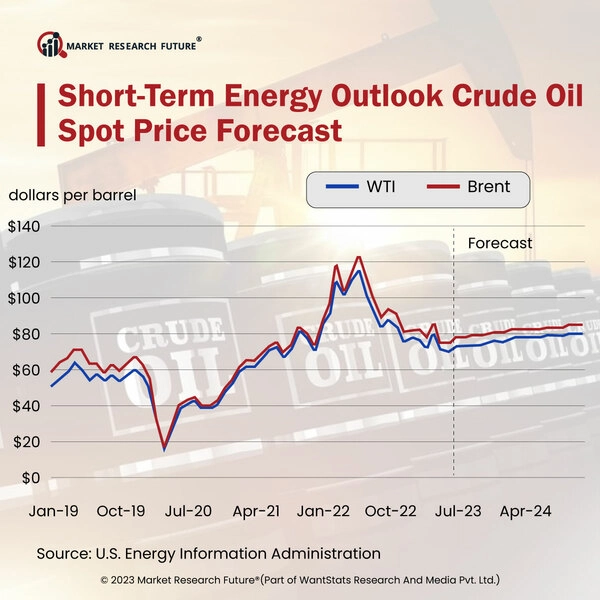
For India specifically, the stakes were existential. The country imports over 85% of its crude oil requirements. There is no buffer large enough to absorb a sustained disruption. Within a week of the Strait’s effective closure, Brent crude had surged from approximately $80 per barrel to nearly $120 — a 50% spike that sent ripples across every oil-linked sector in the Indian economy.
The Oil Shock: India’s Most Immediate and Deepest Wound
Think of India’s economy as a machine that runs on imported oil. When the fuel gets 50% more expensive overnight, every gear — transportation, manufacturing, food supply chains, electricity generation — starts grinding harder. That is precisely what happened in March 2026.
The government moved quickly. Excise duties on petrol and diesel were cut to prevent retail prices from spiking in a way that could trigger social unrest. But this came at a fiscal cost. The fiscal deficit, originally targeted at 4.3% of GDP for the year, was now forecast by economists to swell to 4.7% — and some modeled scenarios as bad as 5%. India’s Balance of Payments deficit, already at $25.2 billion (0.6% of GDP) in 2025–26, was headed sharply wider.
India’s credit rating agency Crisil stated plainly that the impact would “reverberate across the economy through higher transport costs, pushing up both food and core inflation.” This wasn’t abstract analysis — it was showing up in vegetable prices, in the cost of logistics for manufacturers, and in the inputs to India’s vast FMCG sector.
Oil Shock: Key Numbers
- Brent crude surged from $80 → $120/barrel within one week of conflict onset
- Gas prices rose 75% globally over the same period
- India imports 85%+ of its crude oil requirements
- India’s BoP deficit forecast to swell to ~$65 billion in 2026–27 (pre-intervention)
- Post-government measures: deficit expected to improve by ~$30 billion per HSBC
What the GDP Numbers Actually Tell Us
Before the war began, India’s economy was on track for roughly 7% GDP growth in the financial year ending March 2027. The Chief Economic Adviser himself had projected 7.0–7.4% growth. That number looks different now.
Goldman Sachs lowered its India GDP growth estimate by 1.1 percentage points — all the way down to 5.9%. Moody’s aligned closely, with similar revisions to the 5.9–6% range. Both agencies also raised their inflation forecasts: Goldman Sachs raised its CPI projection by 70 basis points.
To put that in perspective: a 1% drop in India’s GDP growth is not just a statistical revision. It represents billions of dollars in lost output, slowed job creation, and reduced tax revenues — all of which compound over time. The scenario analysis published in the International Journal of Economics and Finance Management estimated that a medium-term persistence of oil at $100–130 per barrel could cut India’s GDP growth by 0.5–1.5%, weaken the rupee by 5–10%, and escalate fiscal subsidies on energy and fertilizer significantly.

Dalal Street Under Siege: The Sensex and FII Exodus
Indian equity markets were one of the fastest and most visible channels through which the war’s impact arrived. Within weeks of the conflict starting, the BSE Sensex fell to around 73,583 — a 2.3% single-session decline on March 27, 2026. The broader market saw over 400 stocks record sharp declines. Goldman Sachs downgraded Indian equities from “overweight” to “market weight,” a symbolic but important signal to global fund managers.
Foreign Institutional Investors, who had been cautiously warming up to Indian equities after the India-US trade deal in February, responded to the new uncertainty with an aggressive exit. In just the first two weeks of March 2026, FIIs sold ₹34,000 crore worth of Indian shares. On one particularly brutal Friday, they offloaded ₹5,518 crore in a single session. By end-March, the monthly FII outflow had reached $12 billion — the steepest single-month foreign equity withdrawal in India’s recorded history.
Ambit Capital, one of India’s respected broking firms, noted that earnings cuts recorded between April and December 2025 were “the largest seen in the past four years.” The brokerage warned that foreign investors would now scrutinize “earnings credibility” — not just valuations — before returning to Indian markets.
Sectoral Impact at a Glance
| Sector | Impact | Type |
|---|---|---|
| Aviation | IndiGo fell 4.5%; fuel cost surge compressed margins | Negative |
| Energy / Refiners | Reliance Industries dropped 4.6%; crude import costs rose sharply | Negative |
| Gems & Jewelry (Surat) | Dubai diamond pipeline broken; airspace closures halted rough diamond transport; polishing units on extended shutdowns | Negative |
| Chemicals & Paints | Carbon black, synthetic rubber up 20%; paint manufacturers warned of price hikes | Negative |
| FMCG / Logistics | Transport cost inflation hit distribution networks | Negative |
| Aluminium | LME aluminium rose 3.8% to $3,258/ton; benefits domestic producers | Mixed/Positive |
| IT / Technology | TCS gained 0.5%; defensive outperformance vs broader market | Relatively Resilient |
| Telecom / Utilities | Bharti Airtel +0.4%, Power Grid +0.1%; defensive character held | Relatively Resilient |
The Rupee Bleeds: Currency Markets in Free Fall
The Indian rupee didn’t just weaken — it entered territory that would have seemed unthinkable at the start of 2026. The currency breached ₹93 and then ₹94 per dollar as the war intensified, falling roughly 10% over the preceding year. At its worst moments, options markets were pricing in a 13% probability that the rupee could reach ₹100 per dollar by June 2026.
Two forces drove this simultaneously. First, rising oil import costs created massive dollar demand from Indian energy importers. Every additional barrel of oil purchased at $120 instead of $80 required more dollars to pay for it — putting direct downward pressure on the rupee. Second, the FII exit meant fewer dollars flowing into India from equity markets, compounding the problem.
The RBI intervened — restricting banks from hedging large positions, barring corporates from rebooking cancelled forex contracts, and limiting derivative trades with related parties. These measures helped at the margin, but analysts at HSBC noted they couldn’t fully offset the structural imbalance as long as oil prices remained elevated.
Rupee Pressure: Key Drivers
- Dollar demand surging from oil importers (India buys oil in USD)
- FII repatriation creating capital outflows — $12B withdrawn in March alone
- Broad US dollar (DXY) strength amplifying all USD/INR pairs
- RBI reserve drawdown partially cushioned but couldn’t reverse the trend
- Analysts warned ₹100/$ mark possible if conflict persisted into Q2 2026
India’s Gulf Lifeline: ₹4.2 Lakh Crore in Remittances at Risk
Here is a number that rarely gets enough attention in the market commentary: Indian workers in Gulf countries send home approximately $51.4 billion every year. That’s around ₹4.2 lakh crore — and it represents 38% of India’s total annual remittance inflows.
Of India’s roughly 19 million workers abroad, about 9 million are based in the Gulf — UAE, Saudi Arabia, Kuwait, Qatar, Bahrain, and Oman. These are not bankers or software engineers sending wire transfers. These are construction workers, healthcare workers, domestic staff, drivers, and skilled tradespeople who wire money home to families in Kerala, Andhra Pradesh, UP, and Bihar. This remittance flow supports household consumption, educates children, and builds houses across rural India.
When the conflict escalated, hundreds of Indian workers were evacuated. Indian embassies in Riyadh and Kuwait reportedly came under threat. Citi’s analysts noted that if the conflict lasted, remittances would be “negatively impacted” as income opportunities in the region contracted. S&P’s Head of Asia-Pacific Country Risk told CNBC that if the conflict persisted beyond six months, it would have a “material impact on the Indian economy.”

The Human Economy: Jobs, Leather, Diamonds, and Small Towns
Economic impacts often feel abstract until you trace them to specific towns and occupations. The Iran war’s reach went far beyond crude oil prices and bond yields. It hit the real economy in ways that macroeconomic models sometimes miss.
Surat’s Diamond Industry
Surat processes over 90% of the world’s rough diamonds. The supply chain runs through Dubai — diamonds arrive from mines in Africa and Russia, get sorted in Dubai, and then travel to Surat for cutting and polishing. When Middle East airspace shut down and the “Surat-Dubai diamond pipeline” was broken, the entire chain froze. Small polishing units in Surat’s industrial estates went on what their owners called “extended holidays” — a polite term for mass temporary shutdowns, affecting hundreds of thousands of workers.
Leather, Footwear, and Garments
Cities like Kanpur (leather), Agra (footwear), and Tirupur (garments) have long depended on two pillars: Gulf orders and Gulf remittances supporting domestic consumption. The war disrupted both. Export orders from Gulf buyers slowed, and the returning migrant workers — who now couldn’t find similar wages at home — added to local unemployment pressures.
Chemicals and Paints
Carbon black and synthetic rubber — both critical for tyre manufacturing — are crude oil derivatives. With crude at $120, prices for these inputs spiked 20% in a single month. Paint manufacturers, who use roughly 40% petrochemical inputs, began warning of immediate price increases that would ultimately land on Indian consumers and construction projects.
The Long-Term Growth Story: Is India Still the Bright Spot?
India’s growth narrative entering 2026 was compelling. Strong domestic consumption, a booming services sector, infrastructure investments, and the “China+1” diversification trend made it the favourite destination of global fund managers. The India-US trade deal in February had unlocked additional optimism.
The Iran war didn’t destroy this narrative, but it stress-tested it severely. Net FDI into India was already “languishing between $1 billion and $2 billion” according to Care Ratings data — significantly below India’s peers like Brazil and Vietnam as a share of GDP. Fund managers told CNBC that India’s valuation premium was justified by rapid earnings growth — and now that growth was being revised downward.
The longer the conflict persisted, the more it risked becoming a structural drag rather than a cyclical shock. Ambit Capital’s warning about “earnings credibility” was particularly significant: if corporate India delivered disappointing results quarter after quarter due to energy cost pressures, foreign investors might not return even after oil prices normalized.

Government and RBI Response: Firefighting at Scale
India’s policymakers did not sit idle. The response was multi-pronged, though it illustrated the limited tools available when an external shock of this magnitude hits simultaneously on multiple fronts.
The government cut excise duties on petrol and diesel to prevent a sharp retail price spike. It curbed gold imports and asked citizens to limit foreign travel — both moves aimed at reducing dollar outflows. The rupee hedging restrictions and derivative trade limitations by the RBI were designed to reduce speculative currency pressure.
HSBC estimated that this package of measures could improve India’s Balance of Payments by approximately $30 billion — meaningful, but not enough to fully offset what was forecast to be a $65 billion deficit in 2026–27 without intervention.
The RBI, in its April 2026 policy meeting (coinciding with the ceasefire), kept rates unchanged — a signal that it preferred to support growth rather than tighten further in an already-pressured environment. Markets reacted positively to both the ceasefire and the RBI’s stance.
The Silver Linings: What Worked in India’s Favour
It would be incomplete to paint only a negative picture. The Iran war, like all crises, created both losers and beneficiaries — and India had some of both.
Renewable Energy Acceleration
India had already achieved 266.78 GW of non-fossil fuel power capacity by December 2025 — representing 52% of its installed power base. The oil shock gave every policymaker, bureaucrat, and state electricity board a visceral reminder of why accelerating solar, wind, and green hydrogen was not optional. The crisis may compress what might have been a decade-long policy push into a much shorter timeframe.
Aluminium and Metal Exporters
With Gulf smelters in Qatar and Bahrain unable to export through the Strait, global aluminium prices jumped 3.8% to $3,258 per tonne on the LME. Indian producers like Vedanta and Hindalco found themselves fetching significantly better prices in export markets — a rare bright spot in an otherwise challenging environment.
IT and Services Resilience
India’s $250+ billion IT and services sector proved relatively insulated. TCS, Bharti Airtel, and power sector stocks showed defensive resilience. This reinforced the argument that India’s economic diversification away from manufacturing and commodities has quietly been a strategic strength.
What the Ceasefire Meant — And What It Didn’t Fix
On April 8, 2026, President Trump agreed to a conditional two-week ceasefire with Iran. The market reaction was immediate and powerful: the Sensex surged 3.6% to 77,296 in early trade — its highest level since March 11. Oil fell below $100 per barrel, a significant psychological threshold for India.
But experienced market observers cautioned against declaring victory. The ceasefire was conditional. The underlying tensions between the US, Israel, and Iran had not been resolved. The structural question — of what happens next time a Middle East conflict closes the Strait of Hormuz — remained unanswered.
More importantly, the damage already done would take quarters, not days, to reverse. FII confidence doesn’t rebuild overnight. GDP forecasts take multiple data points to revise upward again. Families of returning migrant workers don’t find new livelihoods in a week. The Surat diamond polishing units that had shut down wouldn’t reopen their doors the moment ceasefire headlines hit Bloomberg.
Recovery, when it comes, will be gradual and uneven. The sectors most structurally linked to energy costs and Gulf trade will recover slower. The IT sector and domestic consumption-driven businesses will likely bounce back faster.
The Structural Lessons India Cannot Afford to Ignore
Every major economic shock teaches something. Here are the vulnerabilities this conflict exposed most starkly — and the policy directions they demand.
Energy Security is National Security
India’s 85% crude import dependence is not just an economic statistic — it is a national security vulnerability. The Iran war made this concrete. Building strategic petroleum reserves, accelerating renewables, and reducing oil intensity per unit of GDP must now be treated as urgent priorities rather than aspirational goals.
Remittance Concentration Risk
Thirty-eight percent of India’s remittances coming from a single region — the Gulf — is a concentration risk that shows up violently in a Middle East conflict. India needs policies that support worker skill upgradation and help the diaspora diversify geographically toward Europe, North America, and Southeast Asia.
Export Diversification
India’s export basket remains narrow and price-sensitive. The economists who observed that currency depreciation doesn’t function as a meaningful export adjustment mechanism — because the import bill inflates faster — were pointing to a real structural flaw. Moving up the value chain in manufacturing is not just an economic goal; it’s a resilience strategy.
Capital Markets and FII Dependency
The fact that a single month’s FII outflow ($12 billion) could push the Sensex into a bear phase and the rupee to record lows reflects India’s continuing dependence on foreign portfolio flows. Deepening domestic institutional participation — through pension funds, insurance, and retail investing — is the medium-term answer.
Frequently Asked Questions
1. How did the Iran-US war affect India’s GDP growth?
Goldman Sachs and Moody’s both revised India’s GDP growth forecast down to 5.9–6% from an earlier projection of nearly 7%, citing higher oil import costs, rising inflation, and slowing corporate earnings driven by the conflict.
2. How much did FIIs withdraw from Indian markets during the Iran war?
FIIs sold over ₹34,000 crore worth of Indian equities in just the first two weeks of March 2026. The total monthly withdrawal reached $12 billion in March — the steepest single-month foreign equity outflow India has ever recorded.
3. Why does a war in Iran affect Indian oil prices so severely?
India imports over 85% of its crude oil needs. The Strait of Hormuz — through which 20–30% of global crude and LNG passes daily — was effectively closed after the conflict began on February 28, 2026. This caused Brent crude to surge from $80 to nearly $120 per barrel within a week.
4. How far did the Indian rupee fall due to the Iran-US war?
The rupee fell to record lows, breaching ₹93 and then hovering near ₹94 per dollar — a drop of approximately 3% just from the conflict onset, and roughly 10% over the preceding year. Options markets at one point priced a 13% probability of the rupee touching ₹100 per dollar by June 2026.
5. Which Indian sectors were most affected by the Iran-US war?
Aviation (IndiGo -4.5%), energy and refining (Reliance -4.6%), gems and jewelry (Surat diamond units shut down), chemicals, paints, and logistics were among the hardest hit. IT, telecom, and utilities showed relative resilience as defensive sectors.
6. How were Indian remittances impacted by this conflict?
India’s Gulf diaspora of about 9 million workers sends home approximately $51.4 billion per year — 38% of India’s total remittance inflows. The war disrupted employment, forced thousands home, and put this critical economic channel at risk, with S&P warning of “material” impact if the conflict lasted beyond six months.
7. What happened to the Sensex during the Iran war?
The BSE Sensex fell to around 73,583, declining approximately 2.3% in a single session during peak uncertainty. More than 400 stocks saw sharp declines. Goldman Sachs formally downgraded Indian equities from “overweight” to “market weight.”
8. Did the India-US trade deal provide any buffer against the Iran war’s impact?
The interim India-US trade deal signed in February 2026 reduced effective US tariffs on Indian goods from 50% to 18%, initially boosting the Nifty 5% at open. However, the Iran war began just days later, quickly overshadowing the deal’s positive effects on market sentiment.
9. What measures did the Indian government take to manage the economic shock?
The government cut excise duties on petrol and diesel, curbed gold imports, restricted currency hedging by banks, barred corporates from rebooking cancelled forex contracts, and asked citizens to limit foreign travel. The RBI also intervened to stabilize the rupee and chose to keep interest rates unchanged at its April 2026 meeting.
10. What structural vulnerabilities did this conflict expose for India?
The war exposed India’s excessive dependence on Gulf oil (85%+ crude imports), concentration of remittances from a single region (38% from Gulf), a narrow export basket, and excessive dependence on foreign portfolio flows for equity market stability. Investment managers stated India is “structurally exposed” to Hormuz-type disruptions.
11. Are there any sectors that benefited from the Iran-US war?
Aluminium producers like Vedanta and Hindalco benefited from a 3.8% rise in LME aluminium prices, as Gulf smelters could not export through the Strait. India’s IT and services sector also showed defensive resilience. The crisis is also likely to accelerate India’s renewable energy transition.
12. What happened to markets when the US-Iran ceasefire was announced?
When President Trump agreed to a conditional two-week ceasefire in April 2026, the Sensex surged 3.6% to 77,296 in early trade — its highest since March 11. Brent crude fell below $100 per barrel. However, analysts cautioned that the structural damage to earnings, FII confidence, and remittance channels would take multiple quarters to fully repair.
Stay Ahead of Geopolitical Market Shifts
At Traders Latitude, we translate complex macro events — oil shocks, currency moves, FII flows — into clear, actionable market education for Indian investors and traders.
Explore Our Research Reports →Conclusion: The War That Reminded India Where It Stands
The Iran-US war of 2026 wasn’t just a geopolitical event for India — it was a stress test of the entire economic model. It exposed how deeply a conflict 3,000 kilometres away could shake the Sensex, squeeze the rupee, disrupt diamond polishers in Surat, worry leather workers in Kanpur, and threaten the monthly remittances that sustain millions of Indian families.
The ceasefire brought relief. Markets bounced. Crude eased. The immediate crisis passed. But the deeper question — how India reduces its structural vulnerability to the next Hormuz shock, the next Gulf crisis, the next oil spike — remains open. And how that question is answered over the next five to ten years will do more to shape India’s long-term growth story than almost any domestic policy decision.
For investors and market participants, the lesson is not to panic in the face of geopolitical uncertainty — but to understand it clearly, price it accurately, and position accordingly with full awareness of the risks involved. That kind of informed engagement with global macro events is, ultimately, what separates disciplined long-term participants from those who are perpetually surprised by the world.