
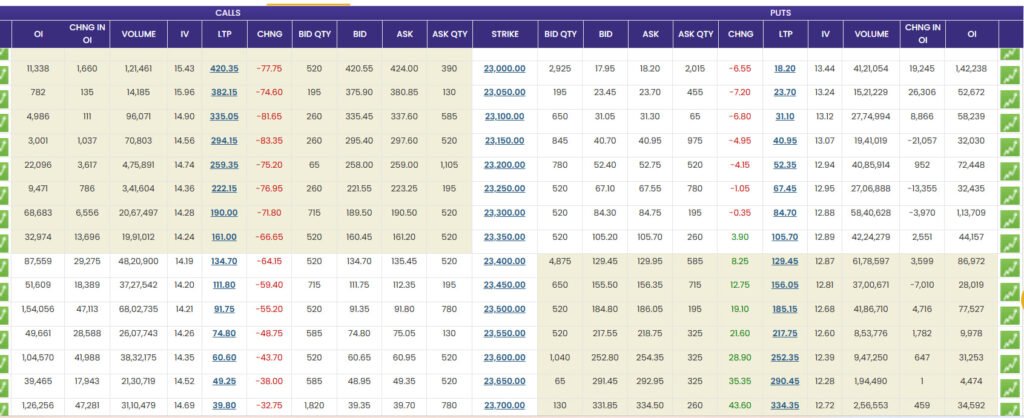
What Is Open Interest In Options Trading?
Open Interest (OI) is one of the most important indicators in options trading. It helps traders understand market sentiment, institutional positioning, and potential support or resistance zones.
In simple words, open interest represents the total number of active contracts that are currently open in the market and have not been closed or settled.
For traders in Nifty, Bank Nifty, and stock options, understanding open interest can improve decision-making and reduce emotional trading.
Many traders struggle to understand open interest in options trading, especially while analysing Bank Nifty and Nifty option chain data.
Why Is Open Interest Important?
Open interest helps traders understand:
- Whether fresh positions are being created
- Whether traders are exiting positions
- Potential market direction
- Strong support and resistance levelsa
- Institutional activity in the market
Most professional traders use open interest along with price action and volume to make better trading decisions.
How To Read Open Interest In Options Trading?
Understanding open interest becomes easier when combined with price movement.
1. Price Up + Open Interest Up
When price rises and open interest increases, it indicates fresh long positions are being created.
Meaning:
Bullish sentiment in the market.
Example:
If Bank Nifty is moving higher and call open interest is increasing with price, buyers may be entering aggressively.
2. Price Down + Open Interest Up
When price falls while open interest rises, it usually indicates fresh short positions.
Meaning:
Bearish sentiment.
This often happens during strong selling pressure in indices or stocks.
3. Price Up + Open Interest Down
If prices rise but open interest decreases, traders may be covering short positions.
Meaning:
Short covering rally.
Such moves can sometimes be temporary.
4. Price Down + Open Interest Down
When both price and open interest decline, long positions are getting closed.
Meaning:
Long unwinding.
This may indicate weakening momentum.
How To Use Open Interest In Bank Nifty And Nifty?
Many traders use open interest to identify:
Call Writing Resistance
High call open interest often acts as resistance.
Example:
If maximum call open interest exists at 25,500 in Bank Nifty, that level may act as resistance.
Put Writing Support
High put open interest generally acts as support.
Example:
Heavy put writing at 25,000 may suggest strong support.
Common Mistakes While Using Open Interest
Many beginners make these mistakes:
Ignoring Price Action
Open interest alone is not enough.
Always combine:
- Price action
- Volume
- Market structure
- Support and resistance
Blindly Following OI Data
Sometimes large players trap retail traders.
Always wait for confirmation.
Best Strategy To Use Open Interest
A practical method is:
Price + OI + Volume Confirmation
If:
- Price breaks resistance
- Open interest increases
- Volume rises
Then probability of trend continuation improves.
Final Thoughts
Open interest is a powerful tool for traders in options trading, especially in Bank Nifty and Nifty.
However, it should never be used alone. Combining open interest with price action, volume, and market structure can significantly improve trading accuracy.
For serious traders, learning how to read open interest properly can help identify stronger opportunities and avoid unnecessary trades.
Practical Example Of Open Interest In Bank Nifty
Suppose Bank Nifty is trading near an important resistance zone and call option open interest is increasing rapidly at a higher strike price. This may indicate that option writers expect the market to face resistance near that level.
Similarly, when put open interest increases at lower strike prices, traders often consider those zones as important support levels.
However, traders should always confirm signals using price action and volume before taking any trading decision.
Conclusion
Open interest is one of the most powerful tools in options trading when used correctly. Understanding how traders are building positions in the market can help identify trend direction, support, resistance, and market sentiment.
For traders in Nifty and Bank Nifty, learning open interest analysis can improve confidence and decision-making. However, it should always be used along with technical analysis, volume, and market structure for better accuracy.
Learning open interest in options trading can help improve market understanding and trading confidence.
Traders can monitor live data using the NSE Option Chain.
https://www.nseindia.com/option-chain